
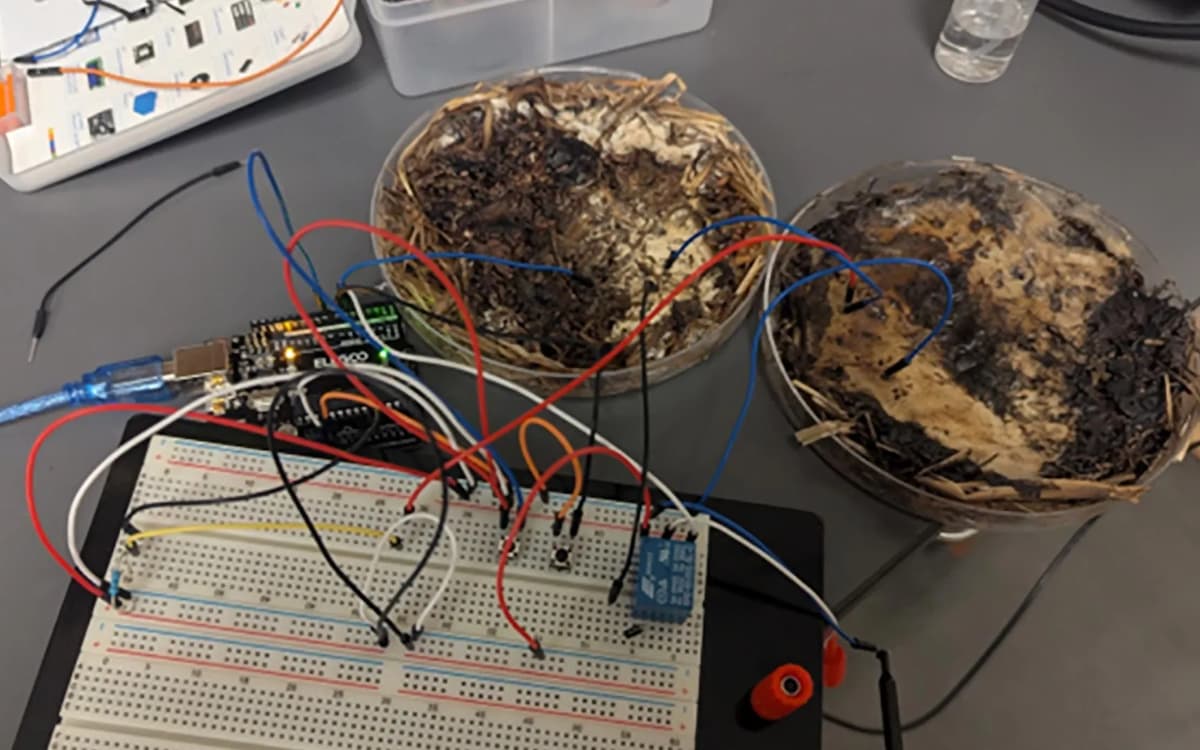
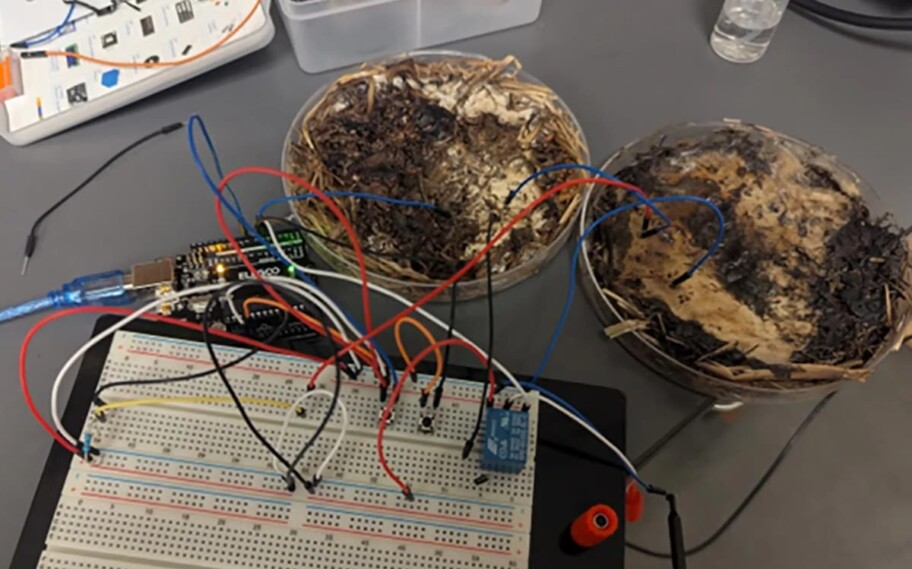
Researchers from Ohio University developed a biological computer made from fungi shiitakecapable of operating as a organic RAM memory with a frequency close to 6 GHz. The discovery open the way for sustainable computing systems inspired by the human brain.
The brain behind the mycelium
The project uses the myceliuma network of filaments that forms the basis of fungi, as material to build memristores: electronic components that imitate the functioning of brain synapses.

Unlike traditional computer architecture, which separates processor and memory, the memristor can store and process information simultaneouslyincreasing energy efficiency.
Scientists have realized that mushroom mycelium can reproduce electrical patterns similar to those neural impulses of the brain. This characteristic makes the material suitable for the so-called neuromorphic computingan area that seeks to reproduce biological logic in electronic systems.
What is neuromorphic computing?
A neuromorphic computing is a field that tries to reproduce, in machines, the way in which human brain processes information. In other words, instead of separating the roles of memory and processing (as happens in traditional computers), this model combines the two functions in the same component.
In conventional systems, the processor needs to constantly fetch data from memory, which consumes time and energy. In a neuromorphic architecture, data is stored and processed in the same locationin a similar way to what synapses and neurons in the brain do.
Thus, integration makes it possible faster responses and energy savingsin addition to allowing continuous learning from experience — something vital for the advancement of artificial intelligence.


In the case of the chip made from shiitake fungi, researchers at Ohio University explored precisely this biological logic. THE mushroom mycelium was used as a kind of “living neural network”, capable of adapting its electrical signals and react to stimuli dynamicallywhich makes it functional for experiments in this type of architecture.
In other words, neuromorphic computing does not just seek to copy the brain, but to be inspired by it to create systems capable of learning, adjusting and evolving — something that to this day challenges the limits of traditional electronics.
From laboratory to biological chip
To transform the mushrooms into functional components, the team cultivated samples of shiitake e mushroomthen dehydrated and connected to custom circuits.
By applying controlled electrical voltages, researchers observed rapid changes between different electrical states, with 90% accuracy and ability to switch 5,850 times per second.

“Being able to develop microchips that mimic real neural activity means drastically reducing energy consumption at rest”, he explained John LaRoccoscientist in the Department of Psychiatry at Ohio University and lead author of the study.
According to him, this efficiency can represent a significant economic and environmental advantage in the future of computing.

Offers of the day:
Sustainability as a driver of innovation
In addition to technical performance, the study highlights the ecological potential of the technology. The mycelium is biodegradable, cheap and resistant radiation and dehydration, which increases its durability compared to common organic materials.
For dismissing rare metals and energy-intensive manufacturing processesthe fungal chip emerges as a cleaner alternative for the semiconductor industry.
Society is increasingly aware of the importance of preserving the environment. Ideas like this could be the starting point for a new generation of eco-friendly devices
Qudsia Tahminaprofessor of electrical engineering and co-author of the research
From mushrooms to rockets
The researchers believe that the advance can be applied in edge computing e aerospace explorationwhere light weight, low consumption and resistance to extreme conditions are decisive factors. In smaller versions, fungal circuits could also improve the performance of wearable devices and autonomous systems.


The study, published in the journal PLOS One under the title “Sustainable memristors from shiitake mycelium for high-frequency bioelectronics” (DOI: 10.1371/journal.pone.0328965), was supported by Honda Research Institute and involved researchers such as Ruben Petreaca, John Simon e Justin Hill.
Also read:
When technology starts to grow
Although still in the experimental stage, the experiment paves the way for a new frontier in which chips are not manufactured, but grown. As LaRocco concluded, “Everything you need to start exploring this technology can fit into a compost pile and a few homemade circuits.”
Source: ScienceDaily and Ohio University
*The sale of products indicated on this page may generate commission for Adrenaline.
Source: https://www.adrenaline.com.br/tech/computador-feito-de-fungos-shiitake-chip-6ghz/